 google.com (opens in a new tab)

- Client
- Services
- Frontend Development
- Backend Development
- Industry
- Consumer
- Stage
- Public
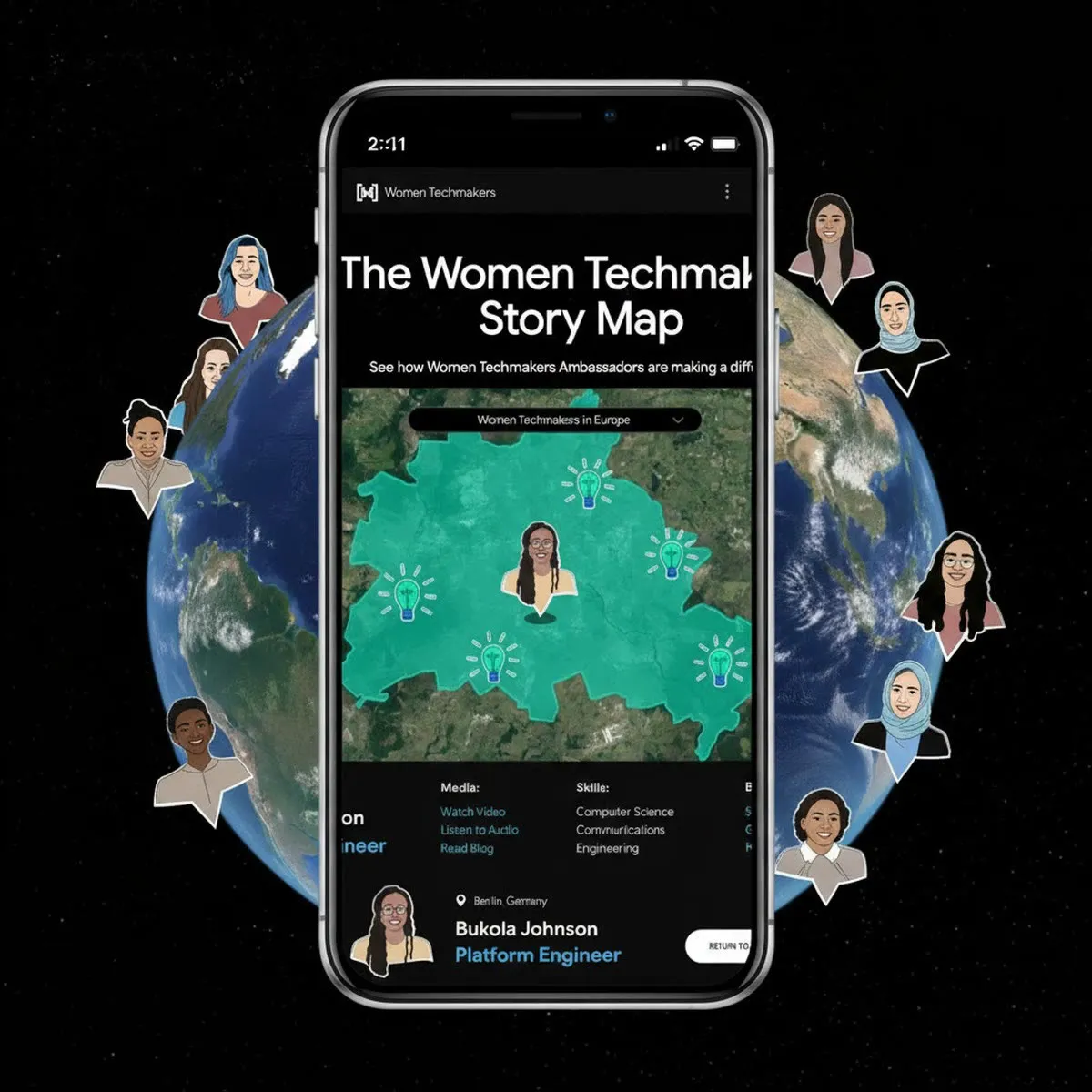
Building an immersive 3D story map of Google’s Women Techmakers
We worked with Google to build the Women Techmakers Story Map, which launched on International Women’s Day 2024.
Our impact
Highlighted Google’s Women Techmakers (WTM) program through its ambassador stories
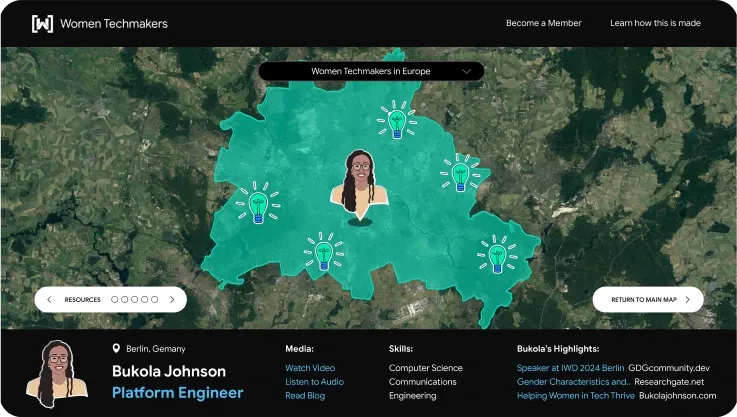
Featured significant locations and resources in each ambassador’s journey, with more stories to be added as new generations join WTM
A GMP proof of concept for leveraging 3D maps as consumer-facing mediums or products
We built an immersive story map with Google Maps APIs.
Overview
Women Techmakers is Google’s program promoting visibility and community for women in tech. Ambassadors are given support and resources to host events, share expertise, and mentor other women. The program has more than 80,000 members.
The Vision
The Google team wanted to use the latest GMP capabilities to bring WTM ambassador stories to life, allowing the user to travel the globe and learn from their journeys in the field. The project would advance the program’s mission of providing resources and fostering community for women in tech. It would also demonstrate the power of the GMP APIs.
Why Lazer?
Google needed strong engineering support to launch their experience on time for International Women’s Day. They chose to partner with Lazer because of our experience with GCP and GMP, our quick iteration on product development, and our work creating great product experiences.
approach
Building the story map experience
We developed alongside the design process, working closely with Google to help guide their creative process with our knowledge of the API capabilities.
We determined that the story map would be a content hub, featuring videos, writing, and resources from each ambassador. Some resources were physical locations we wanted to pinpoint on the map, while others were links to external sites.
approach
Storyboarding and camera movement
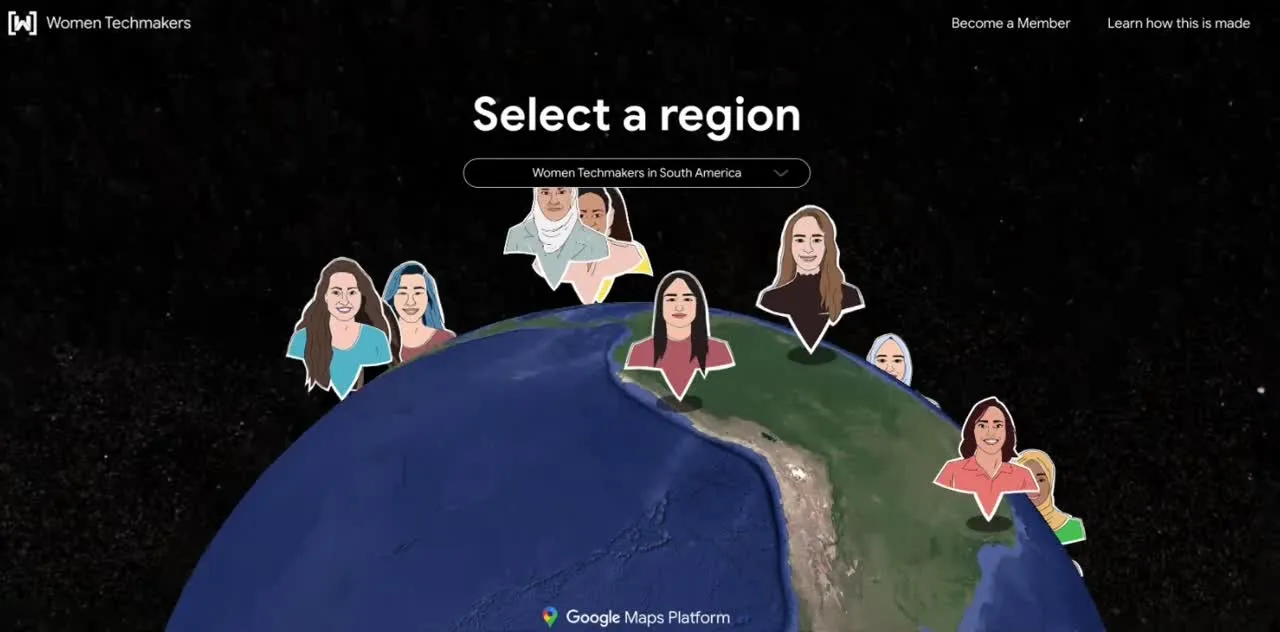
From the beginning, it felt like we were making a movie, which suited the level of immersion we were seeking.
We prioritized the user perspective and storyboarded how to bring them into the content. Working with maps gave us options for 3D perspectives, so we iterated to make sure we were matching the design goals, and then we built the map in just two weeks.
approach
Ramping up with Cesium
Cesium is a powerful tool for working with the 3D interpretation of a physical space.
We quickly learned and became comfortable with it thanks to the helpful info in Google’s API documentation and support from their team.
approach
3D orbit movement
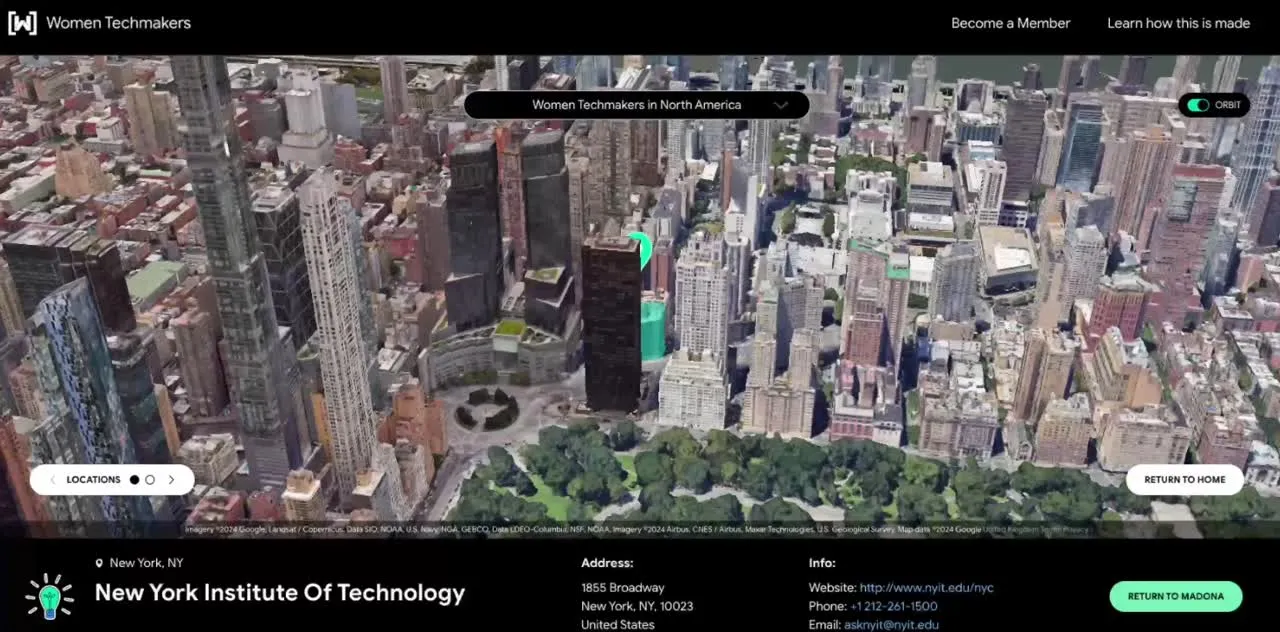
When the user selected a physical resource on the map, the camera needed to orbit the 3D tile to showcase the location in the city.
It’s a really cool effect that took time to understand and implement in Cesium, as it required us to mathematically determine the camera position based on timing and the camera path, which curved around the building.
Conclusion
Built for new stories
We wanted the map to show relevant content to the user as they navigated, but we didn’t want to overwhelm them.
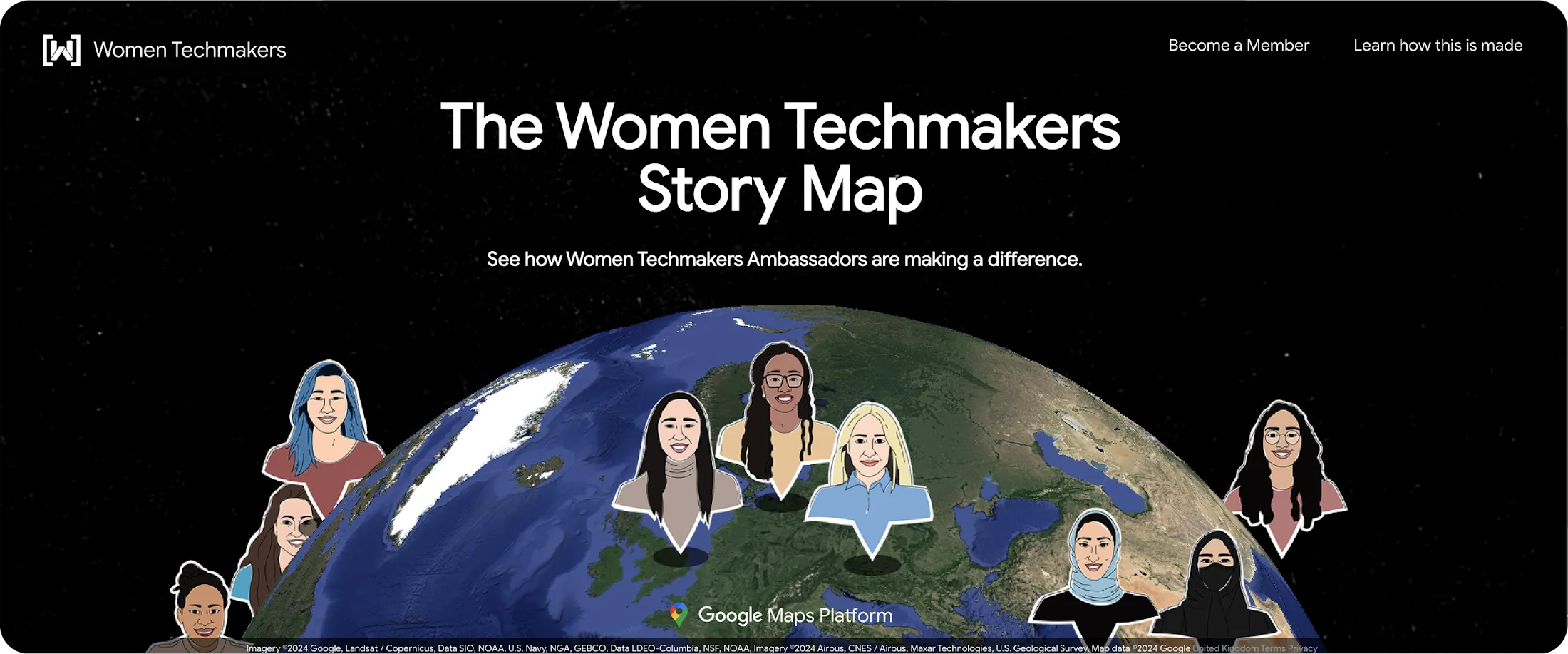
The Women Techmakers Story Map launched featuring a selection of ambassadors, but we built it so stories can easily be added as new members join WTM.
The Google team was happy with how fast we built and aligned with their teams. We’ve continued to work with them on GMP projects, helping them further their exploration of geospatial technology.